Skip to content

Notes

Notes, links & short-form thoughts.

Google recently ran an experiment most councils only get to argue about in theory: reroute a small number (under 2%) of trips away from your most congested roads, and see what happens.

Published in Nature Cities in June, a proper switchback trial, six months, ~100 segments across 10 US cities, alternating which areas got the treatment day by day. Not a simulation, not a vendor whitepaper.
Every eVED headline recently said the same thing: EV drivers to pay 3p (or 1.5p for PHEV) a mile from April 2028. All of it written for someone with one car on the drive. Buried in the actual consultation response, though, is a paragraph aimed squarely at anyone running shared vehicles.

I've been reading through DfT's ZEV mandate review consultation, which opened recently and runs until 23 October. I have opinions.

The headline numbers are genuinely good news: more than one in four new cars sold are now electric, there are over two million EVs on UK roads, and home charging saves drivers around £1,400 a year.

In 2011 I was founding CTO of WhipCar, the UK's first peer-to-peer car-sharing marketplace. Strangers renting each other's cars by the hour.

The idea was genuinely good. But… smartphones weren't universal yet, the insurance products weren't fit for purpose, and the behaviour change we needed was nearly a decade away. It didn't work out.

Last week Uber and Pony AI announced plans to put over 2,000 robotaxis into four European cities.

At the beginning of this year, the UK lost around 2,500 shared cars, not to a technology problem but to parking permits, insurance costs and congestion charging.

I don't think those two facts are unrelated. I think they're the same underlying issue.

Zipcar's UK exit took nearly half of the national car club fleet off the road. In London it was even higher, over 90%. That's around 2,500 vehicles gone in a few months.

It's easy to read that as a failing business model. It isn't — the model works. CoMoUK's research from May puts the saving at roughly £2,800 a year versus private ownership, with each shared vehicle replacing about 23 private cars (28 in London).

After more than a decade at Hiyacar, and with a heavy heart, I've made the difficult decision to move on.

I'm immensely proud of what we built together over the years. I’m especially grateful to the incredibly passionate & curious grafters, both present and past, who showed up every day and did exceptional work often under challenging circumstances. Every single one of you made it worthwhile.

There's loads of wind power in Scotland. How and why it does, or doesn't, reach the rest of the UK is a complicated subject. Here's more on curtailment costs

Ever wondered why video games capture our attention while mundane tasks feel overwhelming? Laurie Hérault shares how understanding the psychology behind gaming can help combat procrastination and boost our productivity. By applying game design principles, like quick feedback and breaking...

'The Line', as is inevitable with most enormous public sector projects, has been cut back and vastly reduced in scope. Could there have been any other outcome? Read End of the Line

GetAround suspends service in the UK — insurance, amongst other things, makes it hard for car-sharing in the UK so it was not surprising to see another operator cease operations here.

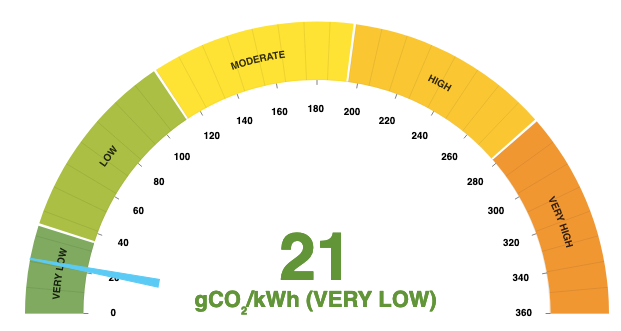
Right now almost 95% of the energy production in the UK is being provided by zero carbon sources, with all time record low emissions of 21 gCO2/kWh. As we move to electrification of all the things, everyone benefits from the reduced emissions. Watch in real-time at the National Grid ESO Dashboard